His heart surgeon said Jim's Mowing added 10 years to his life
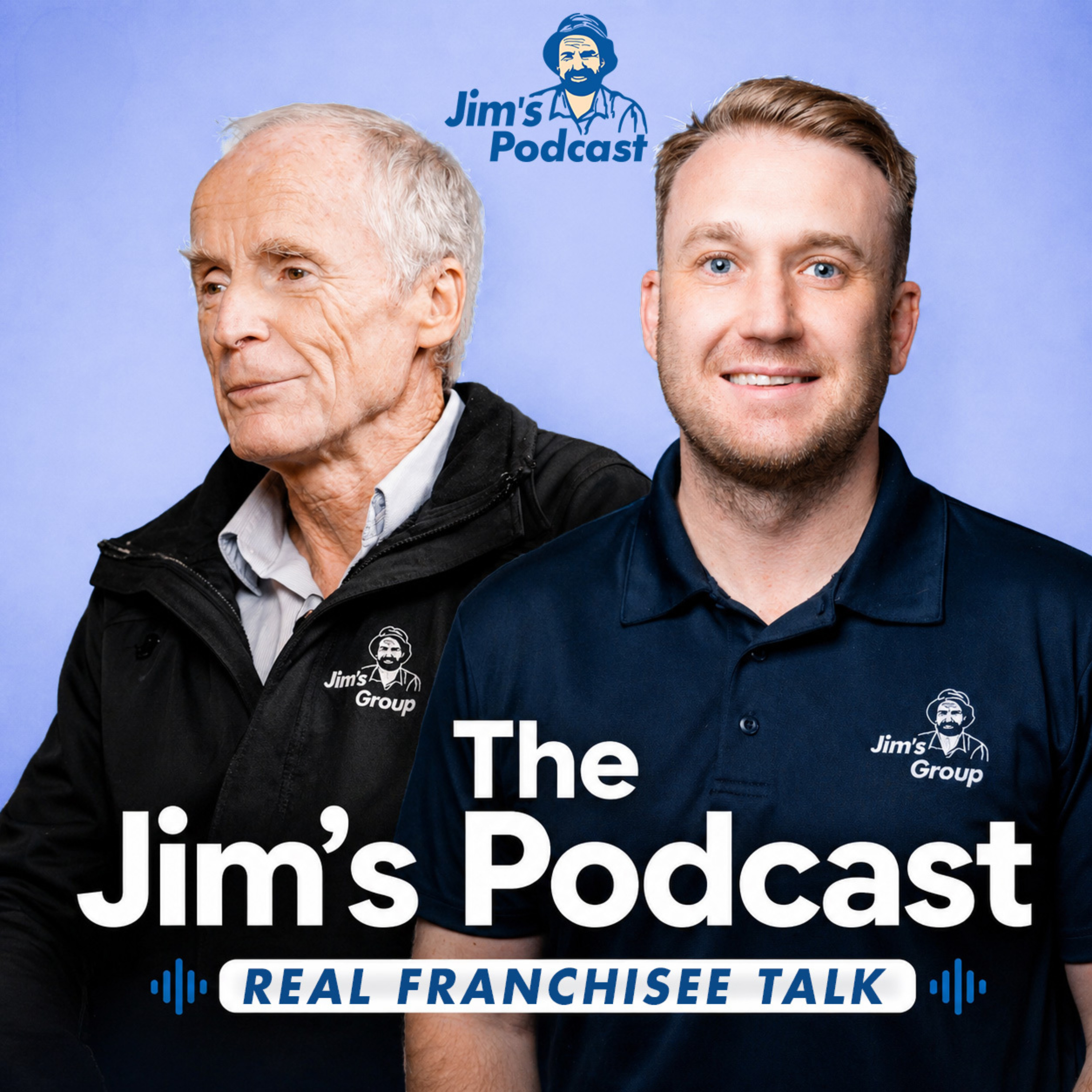
Harry Parker bought a Jim’s Mowing franchise at 69. Two years later, his heart surgeon told him the active work may have added 10 years to his life. Harry now works about 32 hours a week, serves 87 regular clients and mows alongside his daughters. In this episode, he explains how he grew revenue by 30% in 12 months without adding clients, earns more through services such as aeration, lawn feeding, pruning and weed control, and uses Microsoft Copilot to write quotes and plan efficient mowing runs. He also shares his $120-per-hour quoting rule, subcontracting approach and advice for new Jim’s Mowing franchisees.


Key Takeaways
- Harry Parker bought a Jim’s Mowing franchise at 69 and says the active work transformed his health and lifestyle.
- Harry works about 32 hours a week while serving 87 regular mowing clients and working alongside his daughters.
- He grew revenue by 30% in 12 months without adding clients by offering services such as aeration, lawn feeding, pruning and weed control.
- A $385 aeration quote developed into $1,300 of work, showing the value of identifying additional services that genuinely help an existing client.
- Harry uses Microsoft Copilot to help write quotes and plan his mowing run, saving at least 20 minutes of driving time each day.
Harry Parker bought a Jim's Mowing franchise at 69.
Two years later, his heart surgeon told him the active work had added 10 years to his life.
He now works about 32 hours a week, serves 87 regular clients and mows alongside his daughters.
In this episode of the Jim's Mowing podcast, Harry explains how he grew revenue by 30% in 12 months without adding clients.
The growth came from doing more for existing customers through aeration, lawn feeding, pruning and weed control.
One $385 aeration quote developed into $1,300 of work.
Harry also shares his $120-per-hour quoting rule, how he subcontracts large jobs, what he teaches new franchisees and how he uses Microsoft Copilot to write quotes and plan efficient mowing runs.
Chapters
00:00 The surgeon's 10-year health verdict
01:04 Meet Harry Parker
01:29 Growing revenue 30% with 87 clients
02:44 Working with his daughters
05:37 Doing more for existing clients
10:04 Buying a 43-client split
10:45 Quoting at $120 an hour
13:41 Harry's customer service standard
15:39 Equipment setup
16:59 Subcontracting large jobs
21:34 Mentoring new franchisees
26:16 Using AI for quotes and routes
33:43 Privacy warning on AI tools
34:48 Future plans and retirement income
35:42 Health and fitness at 70
38:48 Winter versus peak season
40:06 Franchise versus corporate life
43:50 Observation days with prospects
46:13 Who succeeds in Jim's Mowing
50:04 Advice for starting later in life
--- Send in a voice message: https://podcasters.spotify.com/pod/show/jimsgroup/message
To enquire about joining Jim’s - CLICK HERE
Follow the Jim’s Group social media pages
Facebook - Instagram - Twitter - LinkedIn
Subscribe to the Jim’s Group Podcast Below
To connect with our founder and CEO, Jim Penman visit www.jimpenman.com.au
Frequently Asked Questions
How old was Harry Parker when he bought a Jim’s Mowing franchise?
Harry Parker was 69 when he bought his Jim’s Mowing franchise. Two years later, his heart surgeon told him that the active work may have added 10 years to his life.
How many regular clients does Harry’s Jim’s Mowing business have?
Harry serves 87 regular clients and works about 32 hours per week. He began with a 43-client split and continued building the business despite losing 57 accounts over two years.
How did Harry grow revenue without adding more mowing clients?
Harry grew revenue by 30% in 12 months by doing more useful work for existing clients, including aeration, lawn feeding, pruning and weed control.
How does Harry use AI in his mowing business?
Harry uses Microsoft Copilot to help write customer quotes and plan his mowing run. He says better route planning saves him at least 20 minutes a day in the car.
Chapter 1: Harry's check-up with his surgeon
[00:00]
Harry's surgeon recently gave him remarkable news. Since joining Jim's Mowing, Harry has lost 10 kilos, lowered his blood pressure and blood sugar, and significantly improved his overall health.
Ten years earlier, the surgeon had joked that he expected to see Harry on the operating table at 70. After reviewing Harry's latest results, he crossed that prediction out and changed it to 80.
"You've added 10 years to your life by working with Jim's," the surgeon told him.
Harry now works about 32 hours a week. Even during his quietest week of the year, he turns over approximately $3,200 while working only three days. For Harry, the greatest benefit is the lifestyle. One monthly ride-on job involving ten small blocks takes around 35 minutes and earns $550.
[00:55]
Welcome back to the Jim's Mowing and Jim's Group Podcast. In this episode, we're joined by Jim's Mowing franchisee Harry Parker.
Chapter 2: Meet Harry Parker, two years in
[01:04]
Harry is approaching his 71st birthday and has been with Jim's Mowing for just over two years. His previous podcast appearances attracted positive feedback, particularly from people inspired by seeing someone start a physically active business later in life.
This conversation explores how Harry has built the business, improved his health and created a lifestyle that keeps him active without requiring excessively long working weeks.
Chapter 3: Growing revenue 30% with 87 clients
[01:29]
During the past 12 months, Harry increased his revenue by 30% while maintaining roughly the same number of regular clients. He currently services 87 clients.
Client turnover is a normal part of the business. Harry has lost 57 accounts during his first two years for reasons including deaths, tenants moving and customers deciding to maintain their own lawns. Despite those losses, he has continually replaced the work and improved the quality and value of his client base.
Harry previously ran a sports-clothing business, which is why he sometimes refers to customers as "accounts". That business background has helped him approach Jim's Mowing as an operation to be developed rather than simply a collection of mowing jobs.
Chapter 4: Working with his daughters
[02:44]
Harry has three daughters, and two of them alternate working with him one day each week. The additional income helps them with their mortgages, while the shared work gives Harry more time with his family.
On their day together, they can complete between 15 and 17 jobs. His daughter generally handles the mowing while Harry works on pruning, edging and other tasks. Harry believes two people working together can save closer to two-thirds of the usual time because of the efficiency created by dividing the work.
They often start at 8 am and finish by 2 or 2:30 pm. When Harry works alone, he may finish around 3:30 pm, but his total working week remains approximately 32 hours. This flexibility allows him to take days off when Melbourne's winter weather makes mowing impractical.
Chapter 5: Doing more for existing clients
[05:37]
Harry's 30% revenue growth did not come from adding more clients. It came from identifying additional services that genuinely benefited the people he already served.
For example, a customer initially asked for lawn aeration. After inspecting the property, Harry explained that aeration alone would not solve the problem because much of the lawn was covered in moss and weeds. He proposed a staged treatment plan that included moss and weed control, coring and other lawn-care work. An initial $385 aeration quote ultimately developed into approximately $1,300 of work.
Harry uses seasonal opportunities to make helpful suggestions, including lawn feeding, hedge and rose pruning, and other garden maintenance. He adjusts his communication to each client: some prefer a conversation, while others respond better to a text message.
His approach is consultative rather than forceful. As trust develops, clients become more comfortable accepting his recommendations, and some tell him to complete whatever work he believes is necessary.
Chapter 6: Buying a 43-client split
[10:04]
Harry began by purchasing a split containing 43 clients and doubled that client base within 12 months. During the same period, he approximately quadrupled the turnover.
The previous operator had owned the business for around 12 years but was charging well below current market rates. Harry still has some legacy clients whose prices do not provide his preferred hourly return. He has increased those prices gradually, although they remain below what he would quote for a new job today.
Chapter 7: Quoting at $120 an hour
[10:45]
Harry generally bases standard mowing and edging quotes on a target of approximately $120 per hour. He believes this is consistent with the broader market and notes that many independent operators now charge between $100 and $120 per hour.
Specialised services cost more because they require additional equipment, maintenance and expertise. Ladder work, ride-on mowing and aeration cannot be priced in the same way as a basic lawn service. Harry points out that customers may only see the time spent at their property, not the cost of purchasing, transporting and servicing the machinery.
Experience has taught him to consider the value of the outcome, the equipment required and the time saved for the customer, rather than simply calculating minutes on site.
Chapter 8: Harry's customer service standard
[13:41]
For Harry, strong customer service begins with communication and doing slightly more than the client expects. When starting with a new customer, he may tidy an untidy garden bed or complete another small task without adding it to the bill.
After the job, he walks around the property with the client, explains what he has completed and points out any complimentary work. This shows the customer that he has paid attention to their property and helps establish trust from the beginning.
Harry also actively invites feedback. When one customer later mentioned that she had been unhappy with the top of a hedge, he agreed to correct it and asked her to raise any future concerns immediately so he could resolve them. He believes customers should always feel comfortable giving a service provider the opportunity to put something right.
Chapter 9: Equipment setup
[15:39]
Most of Harry's everyday tools are electric, although he uses petrol equipment where the job demands it, including his ride-on mower and a wheeled grass-slashing machine.
He invested in the slasher after receiving more large-area clean-up jobs with long, heavy grass. The machine works like a large wheeled whipper snipper and is particularly useful around post-and-wire fencing on rural properties. It completes work far more efficiently than tackling the same area with a standard handheld tool.
Harry also lends equipment to newer franchisees he mentors when it will help them complete a job safely and efficiently.
Chapter 10: Subcontracting large jobs
[16:59]
Harry has built a network of landscapers and specialist contractors so he can manage work beyond the capacity of his own equipment.
On one difficult property, a steep area was packed with bamboo and blackberries. Harry and two other franchisees realised they would not finish the work in time, so he contacted a forestry contractor. The contractor arrived the following morning with a Bobcat-mounted mulcher and completed the job in approximately two and a half hours. Because the vegetation was mulched finely on site, there was almost no green-waste expense.
That relationship later allowed Harry to quote on clearing a 12.5-acre property. The forestry contractor completed the work in one day, while Harry coordinated the job and added a margin to the contractor's price. Harry estimates he earned approximately $3,000 for organising the project.
The property-management company now treats Harry as its contact for similar work, regardless of location. His trusted network allows him to accept opportunities that he would previously have declined.
Chapter 11: Mentoring new franchisees
[21:34]
Harry says his own business now runs smoothly, so one of his main challenges is helping newer franchisees establish theirs. Quoting is the issue they most commonly struggle with.
His advice is to estimate whether a job will take two hours, half a day or a full day, then decide what the business needs to earn during that period. A half-day target of $600, for example, gives the operator a starting point for the quote without requiring a perfect estimate for every individual task.
Harry also encourages new operators to convert one-off enquiries into regular clients. When appropriate, he offers both a once-only price and an ongoing service price. The goal is to build a long-term relationship rather than pursue a hard sale.
Sometimes the best way to earn trust is to help customers save money. Harry advised one keen gardener to complete the top-dressing and seeding themselves after he had prepared the lawn. The customer left a five-star review, and the overall project still became a $1,300 account.
Chapter 12: Using AI for quotes and routes
[26:16]
Harry uses Microsoft Copilot to make his quoting process faster and more professional. After providing the customer details and the work required, he asks Copilot to draft the quote. For technical services such as aeration, the document can include explanatory links for customers who want more detail.
He also uses AI as a reference when assessing unusual jobs. For a 12.5-acre property, an AI-generated market range suggested a substantially higher price than his contractor had proposed. Harry checked the concern with the contractor before proceeding, rather than accepting the AI response without question.
AI also supports learning. When a franchisee asked for help quoting the pruning of cherry and lemon trees, Harry used an AI tool to generate a step-by-step guide, then encouraged the franchisee to research future questions independently.
For busy days, Harry gives Copilot his list of addresses and asks it to organise the most efficient route. He estimates that this saves at least 20 minutes of driving on a 15-job day. However, he still checks the result against his local knowledge and challenges routes that do not make sense.
Chapter 13: Privacy warning on AI tools
[33:43]
The discussion includes an important warning about protecting customer information when using generative AI tools. Harry removes phone numbers and email addresses before submitting route or job information.
His routing spreadsheet contains only the details required for the task, such as a name, address and postcode. Franchisees are advised to assume that information entered into an AI service could potentially be retained or exposed, regardless of assurances that a conversation is private.
Chapter 14: Future plans and retirement income
[34:48]
Harry intends to continue building the business while it supports his family and gives him meaningful work. When he eventually wants to reduce his physical involvement, he has several options.
He could sell part of the client base through splits and operate a smaller business, or employ someone to handle the day-to-day work. The second option could turn the business into what Harry calls "mailbox money": a source of retirement income managed by another operator.
Chapter 15: Health and fitness at 70
[35:42]
Harry does not find the work excessively demanding at 71. His family medical history means a heart surgeon checks both Harry and his brother every two years. At his most recent appointment, the surgeon found that Harry had lost 10 kilos and reduced both his blood pressure and blood sugar since joining Jim's Mowing.
The surgeon had once predicted that Harry might need an operation at 70. After seeing the improvement, he changed that prediction to 80 and attributed the additional healthy years to Harry's more active lifestyle.
Working alongside his daughters also reduces Harry's workload and gives them valuable time together. He hopes to grow the business to 100 regular clients. Although the total has moved only from 86 to 87 during the past year, the newer clients are more productive and better suited to the business.
Chapter 16: Winter versus peak season
[38:48]
Winter reduces the frequency of many regular services. Body-corporate properties may move from fortnightly visits to every three or four weeks, while residential clients often extend their schedules.
Harry completes approximately 30 to 35 jobs per week during winter. As spring growth begins, that figure rises into the 40s. A quieter winter week may still produce between $3,500 and $4,000, while weekly turnover during the main eight-month growing season can range from $5,000 to $8,000, depending on larger quotes and one-off projects.
Chapter 17: Franchise versus corporate life
[40:06]
Before joining Jim's Mowing, Harry owned businesses and also spent time as a senior manager at Canterbury International, a large rugby-apparel company. He disliked the corporate environment, where his chief executive used fear and threats as a management style. Harry left after 12 months and returned to running his own business, even though that meant working 80 to 90 hours a week.
His Jim's Mowing franchise is very different. Harry follows the system but retains control over how he runs his business. Support is available from the franchisor and mentors, particularly during the early stages, without unnecessary interference.
Harry believes the system is straightforward. Operators who simply mow can still build a solid income, but those who think beyond the mower and actively develop the business can achieve considerably more.
Chapter 18: Observation days with prospects
[43:50]
Prospective franchisees can spend an observation day with an existing operator to see the work firsthand and ask questions. After watching Harry's previous podcast appearance, one electrician from Lilydale arranged to join him for a day.
Most prospects want to understand earnings, quoting and business expenses. Harry shows them more than the physical work. He has invited some into his home office to explain his financials, the Jim's Jobs system and the diary process, giving them a practical view of how the business operates behind the scenes.
Chapter 19: Who succeeds in Jim's Mowing
[46:13]
Harry believes communication is the most important quality for a successful Jim's Mowing franchisee. Operators need to understand customers, recognise useful work and confidently ask for the sale without applying pressure.
He gives the example of a weedy garden bed. Manually pulling the weeds could be slow, expensive and ineffective if roots remain in the soil. A knowledgeable operator can explain that careful spraying, followed by a second treatment and later clean-up, will cost less and deliver a better result.
That approach does more than solve the immediate problem. It creates several useful visits and gives the operator opportunities to build a trusted relationship with the client.
Chapter 20: Advice for starting later in life
[50:04]
Harry bought his Jim's Mowing franchise at 69. He did not need to keep working financially, but retirement did not appeal to him. After 40 years of building businesses, he wanted another challenge and believed he could create something valuable.
The business keeps him outdoors, physically active and mentally engaged. Every property presents a different problem, and even familiar jobs offer opportunities to find a faster or better method.
Harry also values the human side of the work. Many of his clients receive home-care support, and he will occasionally reduce or waive a charge when someone genuinely needs help. By asking questions and taking an interest in people, he develops relationships that extend beyond basic lawn maintenance.
For anyone considering a new direction later in life, Harry's experience shows that the right business can provide income, purpose, fitness, social connection and a worthwhile challenge.